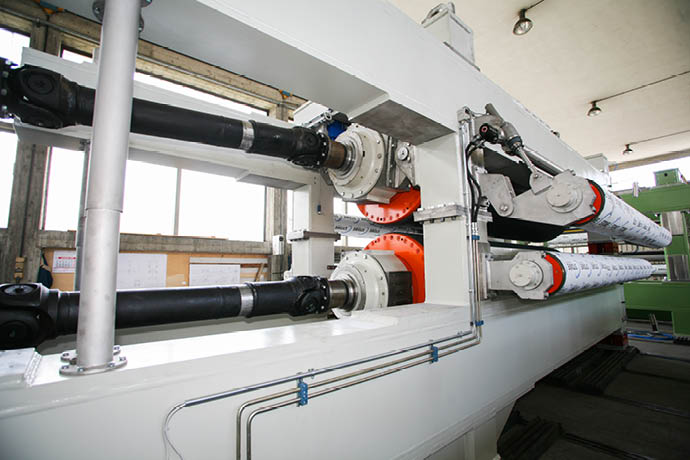
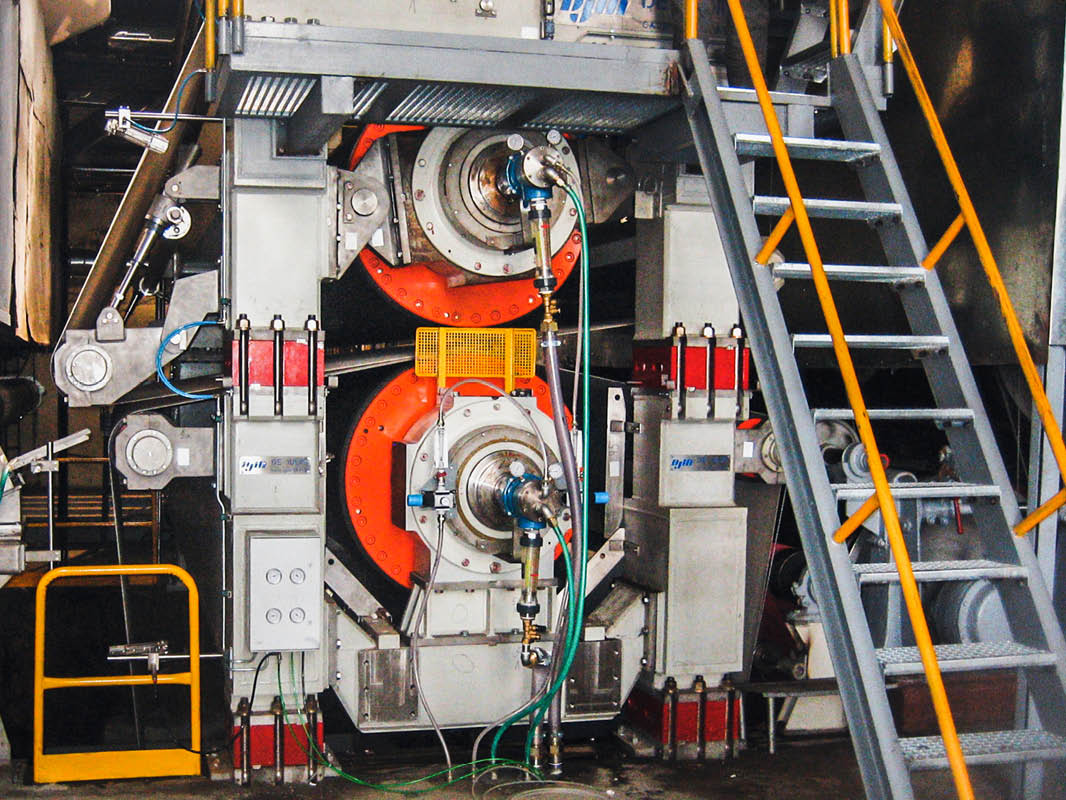
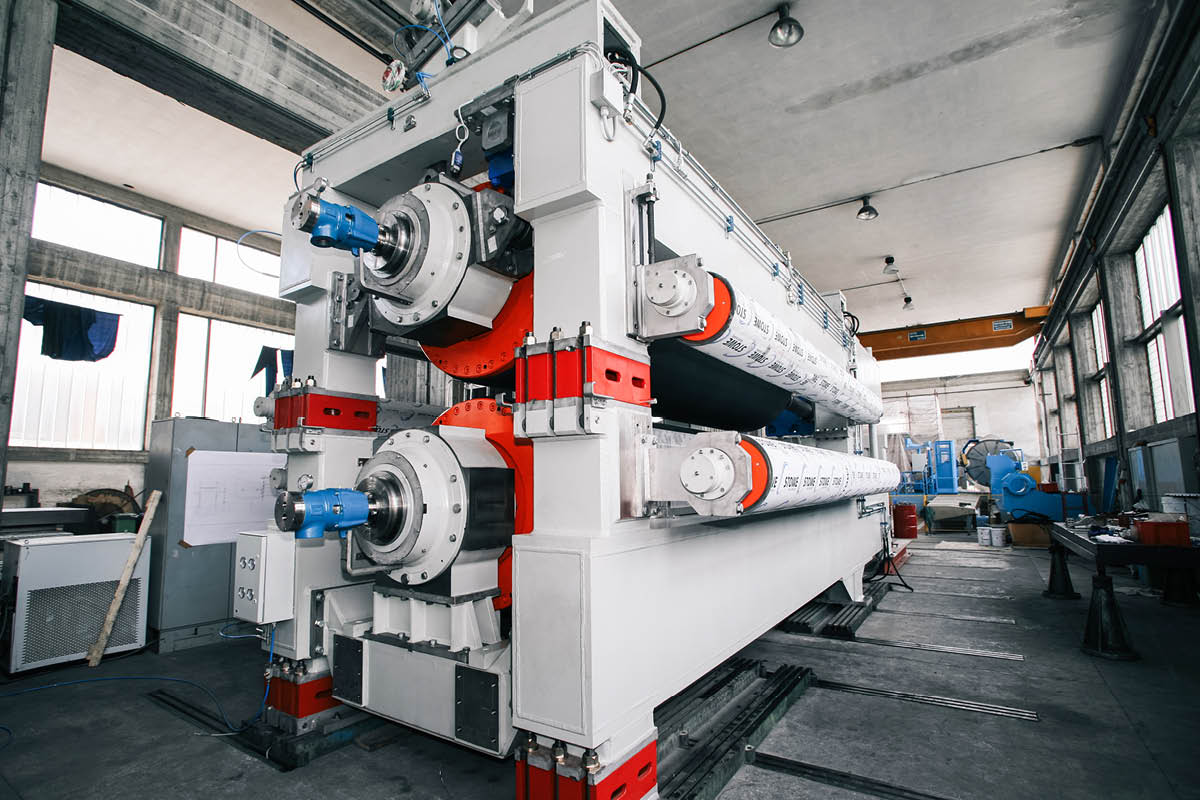
De Iuliis C.& A., with over 70 years of experience in the construction of paper machines, is capable of designing and manufacturing compact, high-efficiency press sections for paper and cardboard machines.
The design and construction of new press sections or the rebuilding of existing plants, in addition to ensuring the highest dryness level, have always been inspired by the following guidelines: • Simplicity of execution and cost-effectiveness in management; • Practicality and maximum operational safety. The technical staff is always available to study, design, and create customized solutions that meet the most diverse needs.
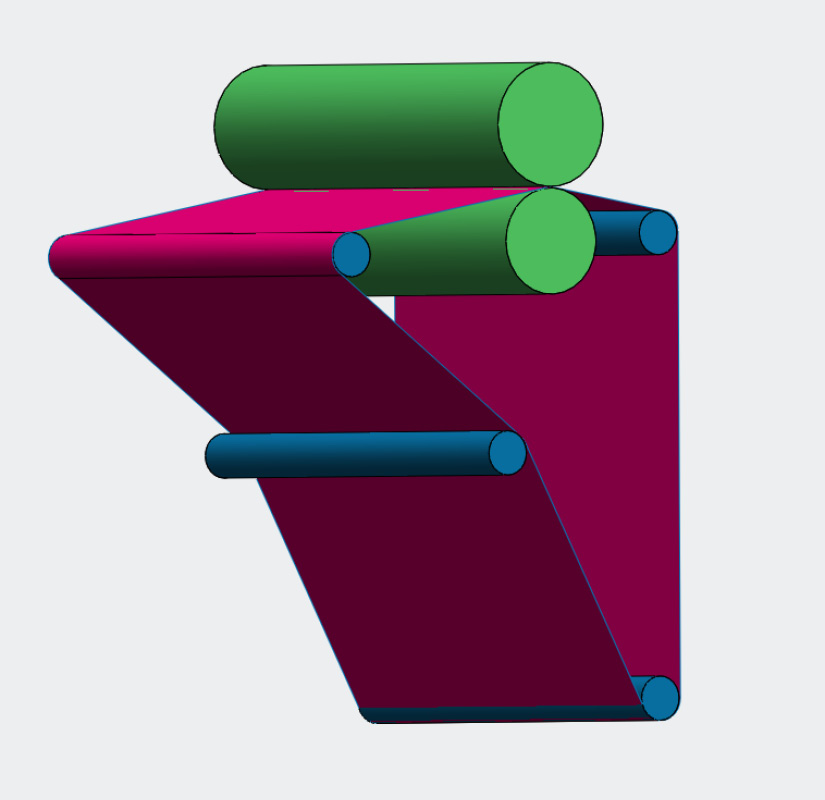
This press type covers an extremely wide grade and speed range as well as a range of nip conditions.
Used on virtually all grades, variations in this type of press include inverted and reversed 2nd press (fabrics on the top side of the sheet).
The BiNip press in all its variants is used to produce both fine paper and packaging grades, and for fine paper can be combined with a single-felted third press, while on packaging machine third press can be double-felted.
Bi-Nip Press is designed to maximise water removal, efficiently transferring the web from the forming section to the dry part and increasing the quality of the paper.
Double-felted first press:
prevents crushing and allows higher loads
Increases efficiencies and less paper breaks
Improves product quality in terms of strength and surface properties
This type of press can be used both in the manufacture of low weight newsprint and packaging grade.
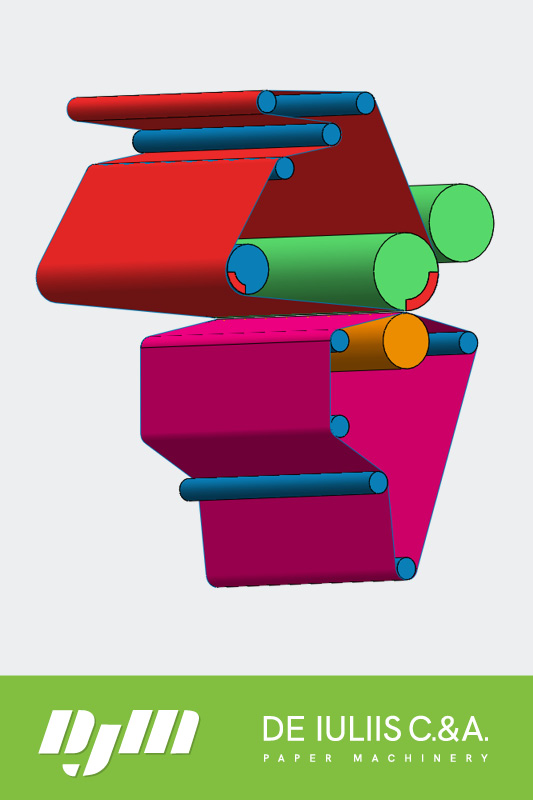
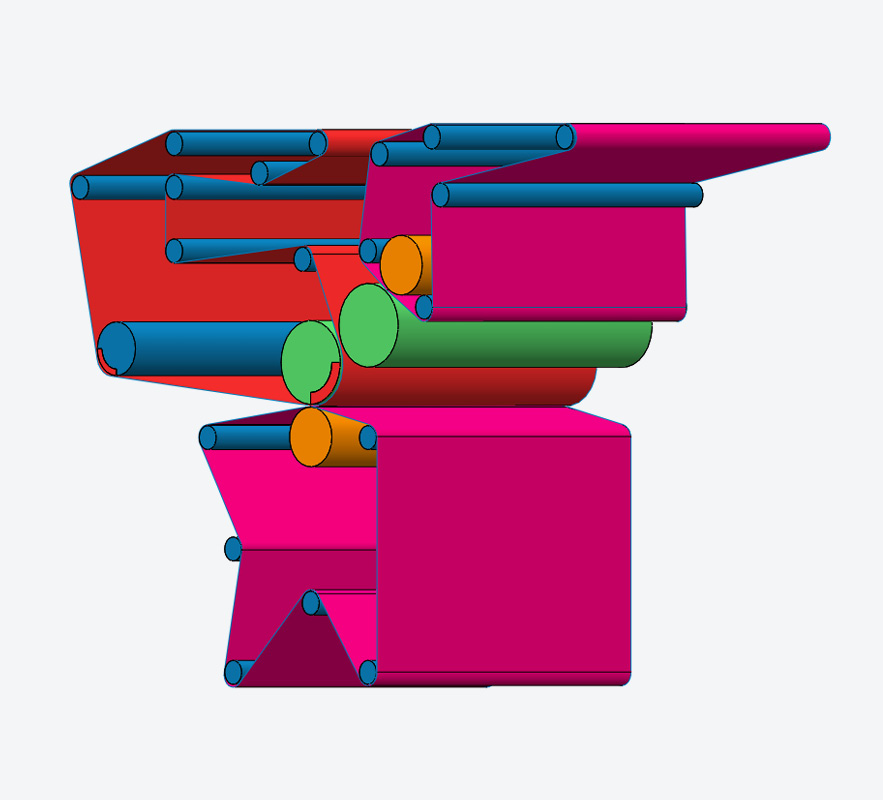
The trinip is a press with three contact points that provides constant support of the sheet taken from the felt through the first three nips, eliminating free draw forces. The paper remains always in contact with one roll, so the in the press section are not required
additional guide roll, reducing the press section dimension. A dry and strong sheet at the exit of the trinip helps to reduce
the risk of breakage and to increase the runnability. Moreover Trinip can work at very high speeds.
The double-felted first nip allows for higher press loads without crush. Trinip can be provided with a fourth press which reduces the different sheet smoothness from the two sides of the paper.
Main advantages:
elimination of re-wetting
increasing content of dryness after the press part
paper guiding without free draw forces
shortened paper track in presses
shortened press part length
Increasing of efficiency and runnability of the machine
NIP width 60 – 90 mm Pressure up to 350 kN/m single or double-felted.
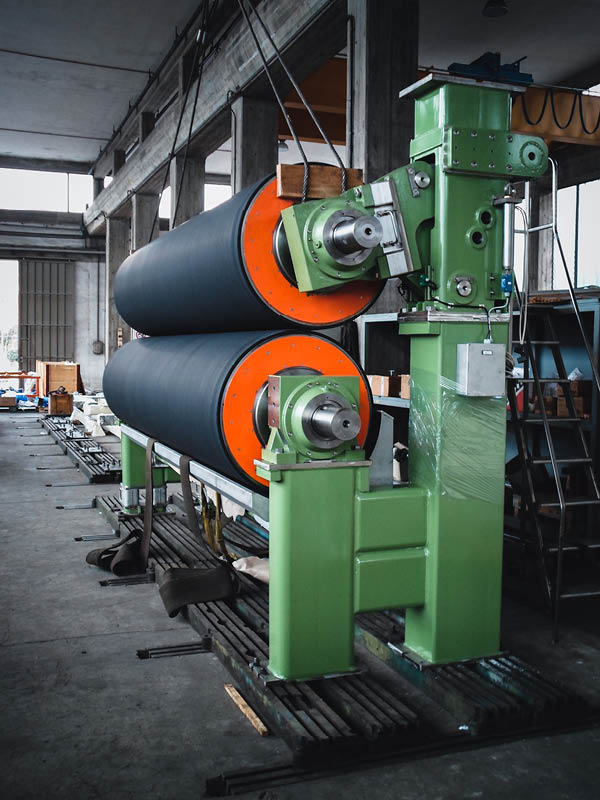
Most suitable for kraft, liner, writing & printing or speciality paper because of efficient water removal, the jumbo press is an extended Nip press, that can bring great advantages to the paper production.
Main advantages:
Wide variability of cylinder diameters from Ø1000 to Ø1800
High pressure pulses
High production increasing (about 5% for each dry point gained)
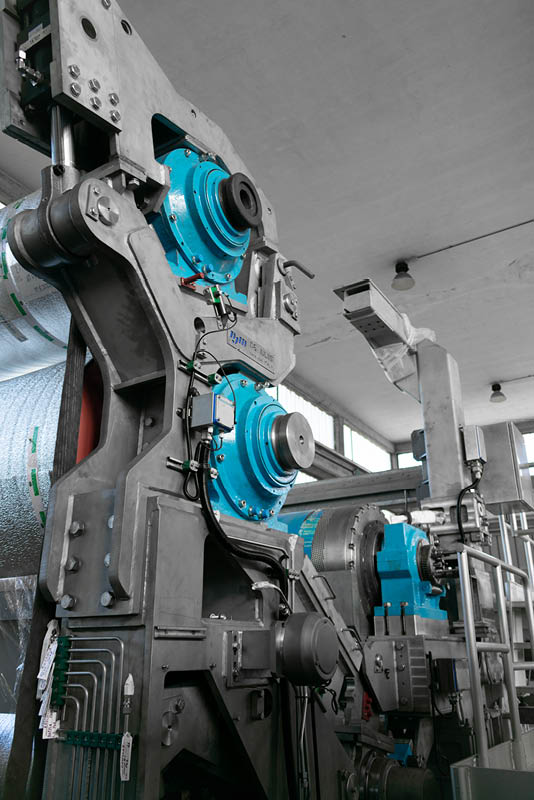
The Shoe Press is an extended nip press in which a shoe and a polymer belt in contact with a counter roll replace the traditional press roll pair. This configuration significantly increases nip dwell time and enhances dewatering efficiency. It is particularly suitable for packaging grades as well as writing and printing papers, especially on high-speed machines.
Key Advantages:
Nip extension up to 10 times greater than that of a conventional press
Very high impulse, enabling more efficient water removal
Reduced energy consuption dryer section, resulting in higher productivity
Lower fiber densification, improving bulk properties of the paper
This press type covers an extremely wide grade and speed range as well as a range of nip conditions.
Used on virtually all grades, variations in this type of press include inverted and reversed 2nd press (fabrics on the top side of the sheet).
The BiNip press in all its variants is used to produce both fine paper and packaging grades, and for fine paper can be combined with a single-felted third press, while on packaging machine third press can be double-felted.
Bi-Nip Press is designed to maximise water removal, efficiently transferring the web from the forming section to the dry part and increasing the quality of the paper.
Double-felted first press:
prevents crushing and allows higher loads
Increases efficiencies and less paper breaks
Improves product quality in terms of strength and surface properties
Reduces steam usage
Increases production with quality
This type of press can be used both in the manufacture of low weight newsprint and packaging grade.
The trinip is a press with three contact points that provides constant support of the sheet taken from the felt through the first three nips, eliminating free draw forces. The paper remains always in contact with one roll, so the in the press section are not required
additional guide roll, reducing the press section dimension. A dry and strong sheet at the exit of the trinip helps to reduce
the risk of breakage and to increase the runnability. Moreover Trinip can work at very high speeds.
The double-felted first nip allows for higher press loads without crush. Trinip can be provided with a fourth press which reduces the different sheet smoothness from the two sides of the paper.
Main advantages:
elimination of re-wetting
increasing content of dryness after the press part
paper guiding without free draw forces
shortened paper track in presses
shortened press part length
Increasing of efficiency and runnability of the machine
NIP width 60 – 90 mm Pressure up to 350 kN/m single or double-felted.
Most suitable for kraft, liner, writing & printing or speciality paper because of efficient water removal, the jumbo press is an extended Nip press, that can bring great advantages to the paper production.
Main advantages:
Wide variability of cylinder diameters from Ø1000 to Ø1800
High pressure pulses
High production increasing (about 5% for each dry point gained)
Cantilever execution for easy felt replacement
Nip Width: 200 – 350 mm Pressure up to 1,300 kN/m
The Shoe Press is an extended nip press in which a shoe and a polymer belt in contact with a counter roll replace the traditional press roll pair. This configuration significantly increases nip dwell time and enhances dewatering efficiency. It is particularly suitable for packaging grades as well as writing and printing papers, especially on high-speed machines.
Key Advantages:
Nip extension up to 10 times greater than that of a conventional press
Very high impulse, enabling more efficient water removal
Reduced energy consuption dryer section, resulting in higher productivity
Lower fiber densification, improving bulk properties of the paper
De Iuliis delivers a turnkey PM1 modernization for Raipaper, featuring a new fourdrinier, Combi Press, upgraded vacuum and dryers, boosting quality, efficiency and Industry 4.0 readiness.